Gate Control
Dry-contact output for common operator interfaces, with event logging and conservative control boundaries.
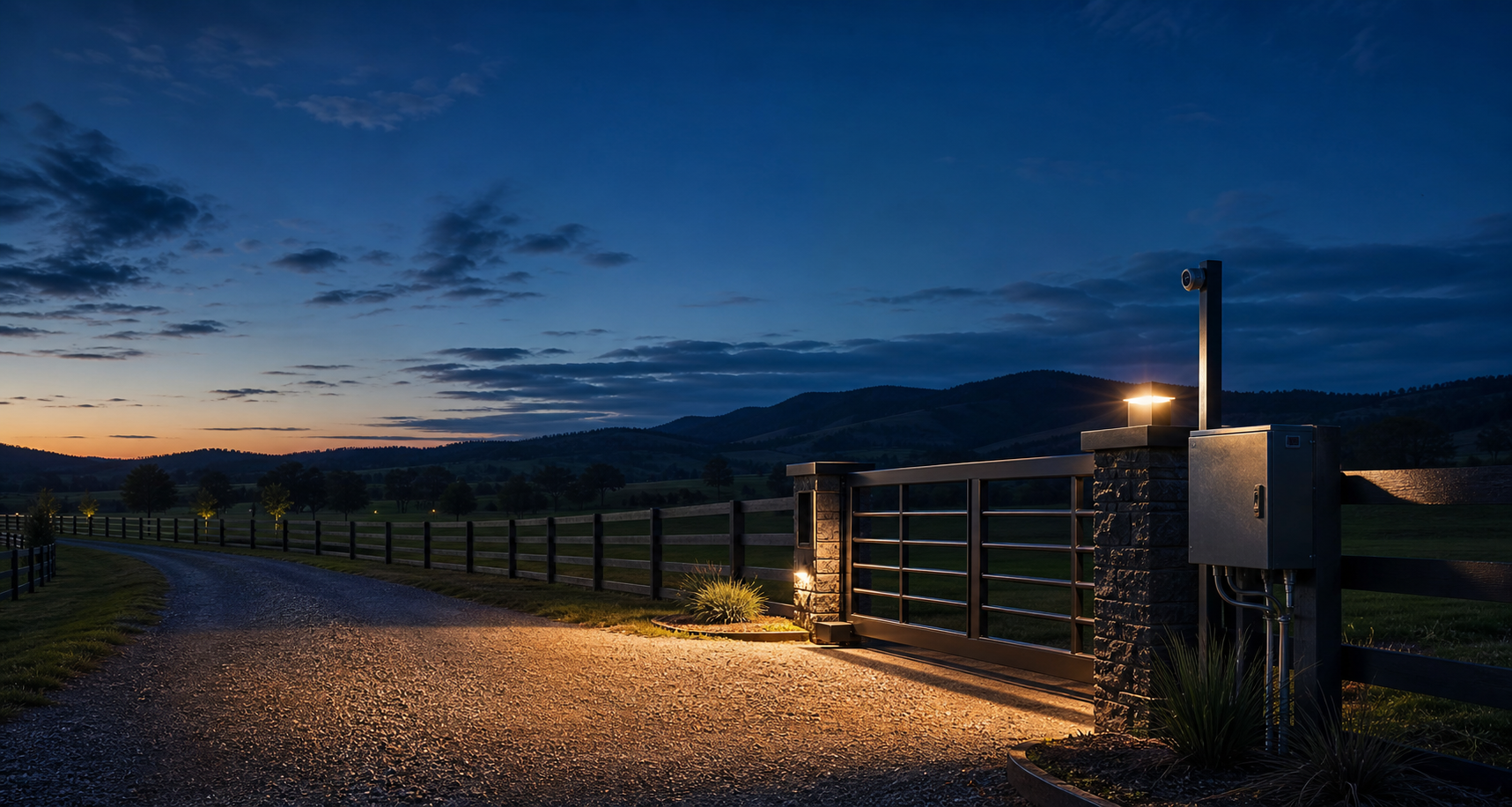
Rural entrance operations
Perimeter One coordinates gates, beam sensors, configurable event inputs, flood lights, cameras, phone alerts, battery-primary power, Ethernet or Wi-Fi connectivity, and installer diagnostics through a local-first controller that works beside existing gate operators. Early beta sites are now being considered.
The problem
A modern property entrance is usually a mix of gate operator, beams, lights, cameras, keypads, Wi-Fi bridges, relays, and improvised wiring. When something fails, owners lose visibility and installers lose hours diagnosing it.
The platform
Perimeter One Core sits beside the existing gate operator and coordinates the pieces around it: beam sensors, configurable event inputs, gate state, lighting zones, camera snapshots, phone alerts, local logs, and web dashboard access.
Dry-contact output for common operator interfaces, with event logging and conservative control boundaries.
The current prototype uses a beam sensor, but the same event-input approach can support other dry-contact or relay-style sensors, including many motion sensor setups.
Lux-aware control for floods, approach lights, keypad lights, and work lights, with dark-only operation when daylight makes lighting unnecessary.
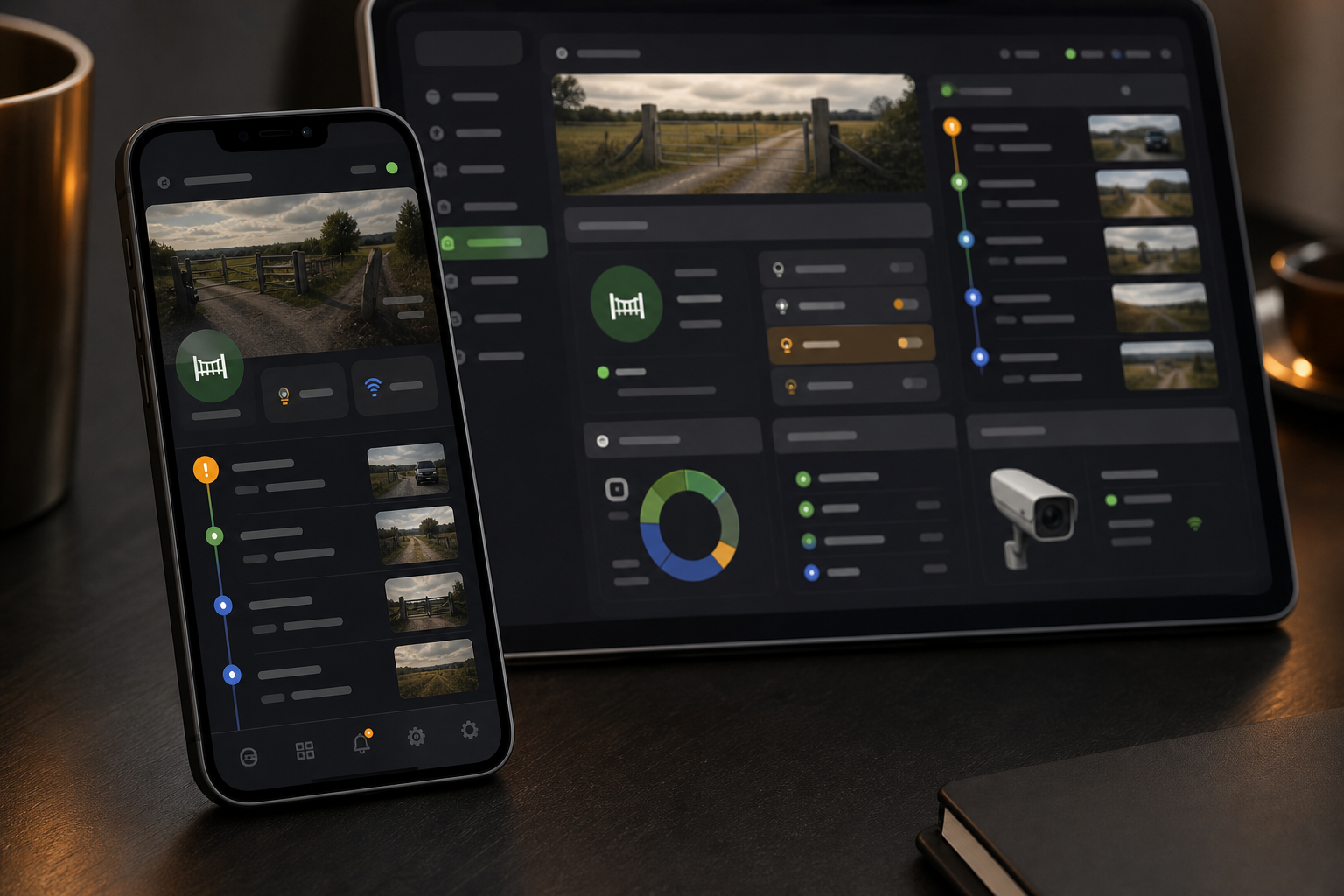
The current camera integration captures entrance snapshots and attaches them to real-time phone notifications, so owners see what happened, not just that something happened.
Current hardware is battery-primary, with Ethernet or Wi-Fi connectivity options and optional backup power where the site supports it.
Live input testing, relay checks, software health, device status, and support access before a truck roll.
Current working functions
The current Perimeter One prototype is already running as a local entrance controller with an event-sensor input, dark-aware light automation, gate relay control, service/reset output, power health monitoring, event logs, remote update support, and home-automation-compatible event payloads. The companion camera package already captures entrance snapshots, sends phone notifications with the image attached, and keeps image history available for review.
The controller reads ambient light and can keep flood outputs inactive during daylight, even when an entrance event is triggered. That means entrance lights respond when they are useful: after dusk, at night, or below a configured darkness threshold.
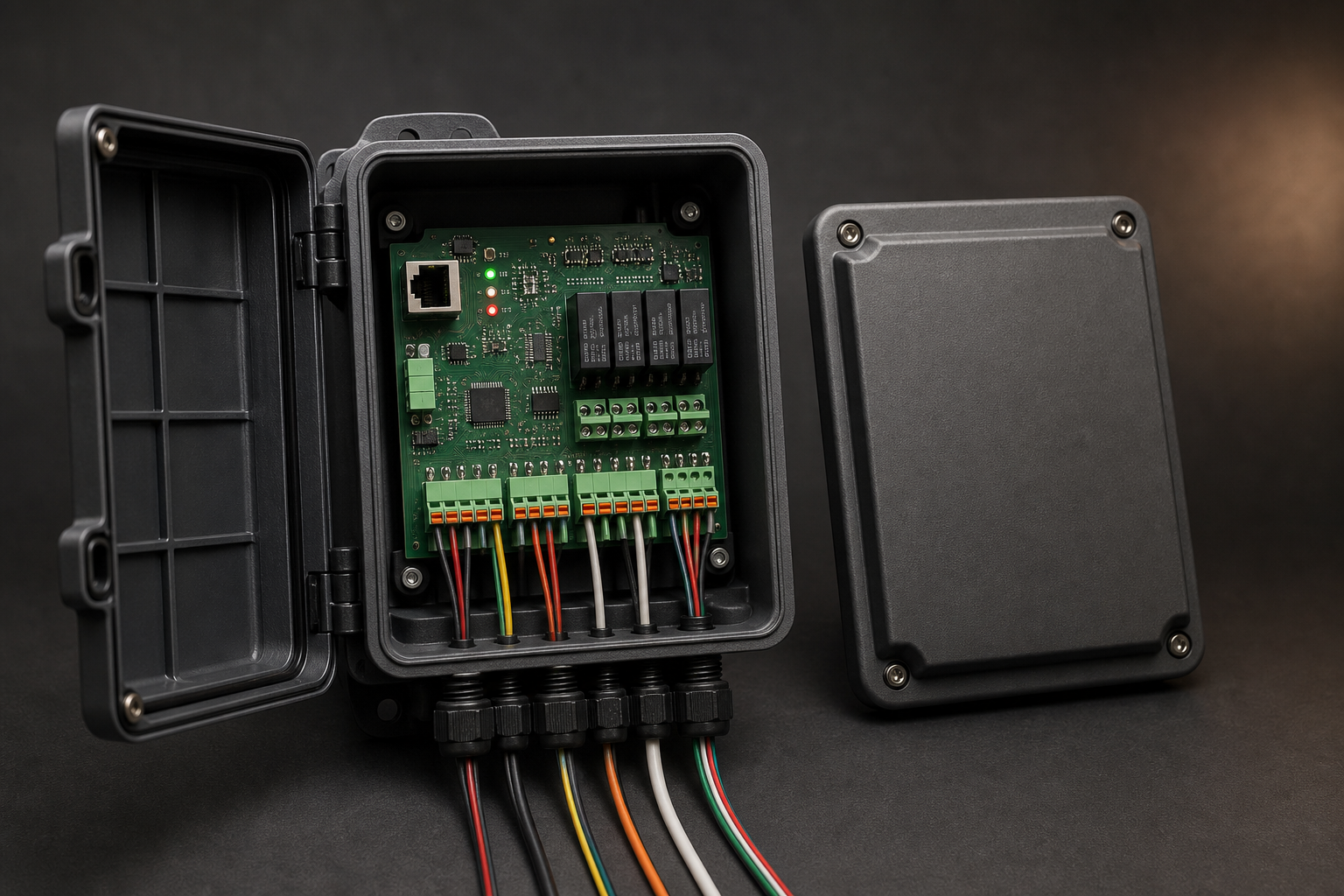
Hardware direction
The prototype proves the behavior on a battery-primary architecture with flexible connectivity options. The product roadmap hardens that into field hardware with protected inputs, protected relay outputs, clear terminals, surge protection, test pads, and enclosure-ready layout.
Local-first reliability
Essential entrance behavior runs on-site. Companion services add notifications, history, remote support, fleet visibility, and camera snapshots, but the core logic is not dependent on a remote server.
Customer payoff
Beam broke. A configured event sensor went active. Gate opened. Floods came on because it was dark. Camera captured the arrival. Your phone got the snapshot. Perimeter One turns the entrance into a readable event trail.
Beta program
Perimeter One is looking for a small number of rural entrances where the product can be installed, observed, improved, and validated under real conditions.
Existing automatic gate, long driveway, limited visibility from the house, and a real need for entrance alerts, lighting, or camera snapshots.
A local-first entrance controller, configured event logging, lighting automation options, and direct feedback access during the beta period.
Which inputs matter, how many lighting zones real sites need, what installers need to diagnose issues, and where the hardware should harden next.
Apply for beta
Early beta openings are limited. The best applicants have an existing gate, a real entrance problem, and willingness to share feedback while the product is refined.